
The Next Opportunity in Long-Term Care: Repurposing Yesterday's Homes for Tomorrow's Needs
Part 3 of a three-part series on addressing Canada’s long-term care challenges
Authors: Shreya Garg and Matt Galvin
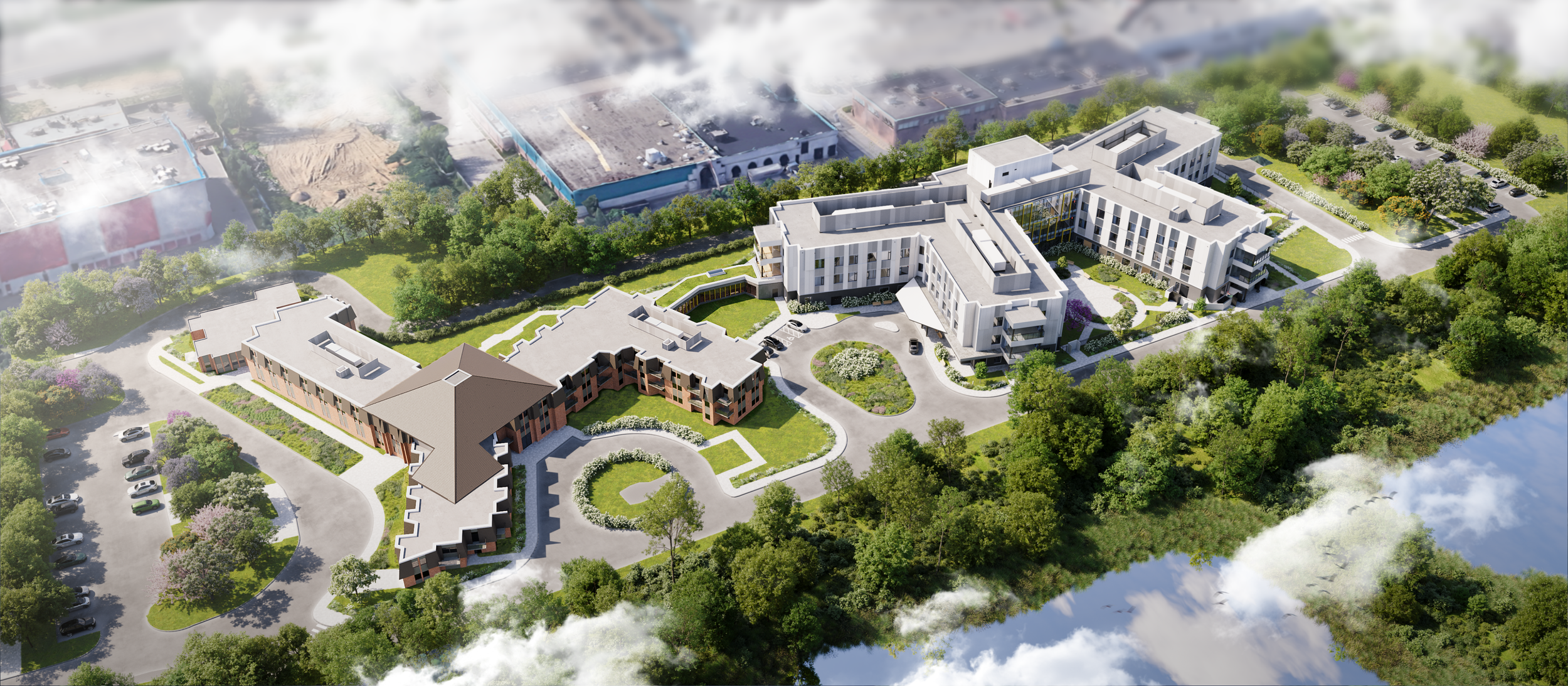
Ivan Franko Long-Term Care Home - Mississauga, ON
Ontario's LTC redevelopment program is creating a new challenge: what happens to the older homes being left behind?
Former LTC homes represent an opportunity to create affordable retirement living, supportive housing, and assisted living options.
Adaptive reuse can help address both senior housing needs and broader housing affordability challenges.
Reusing existing buildings can reduce costs, shorten timelines, and preserve embodied carbon.
The most successful projects combine thoughtful planning, detailed investigations, and innovative technologies to unlock the potential of aging assets.
As Ontario's long-term care (LTC) redevelopment wave reaches its peak, a new question is emerging: What will happen to the homes being left behind?
Across the province, LTC operators are transitioning residents into modern facilities, leaving a growing inventory of former LTC homes behind. Rather than allowing these buildings to sit vacant or face demolition, we should view them as an opportunity. While the recently announced MLTC Renovation Program provides funding to upgrade older homes for continued long-term care use, meeting current MLTC standards can be costly. Alternative uses should also be considered. Converting former LTC homes into affordable retirement residences, supportive housing, assisted living communities, or other residential care facilities can help address critical gaps in Canada's senior housing continuum while extending the life of existing assets through less intensive renovations.
Addressing the “Missing Middle” in Senior Housing
Canada's senior housing continuum has long been polarized between independent living and long-term care. Many seniors do not require LTC but need more support than can reasonably be provided at home. At the same time, affordable supportive housing and retirement living options remain limited in many communities.
Former LTC homes are well positioned to help address this gap. They already contain many of the features needed to support aging populations, including accessible layouts, commercial kitchens, communal spaces, healthcare infrastructure, and established community connections. With thoughtful planning, these buildings can provide housing that supports independence while accommodating changing care needs.
The benefits extend beyond senior housing. When appropriate housing options are unavailable, many seniors remain in larger homes that no longer meet their needs. Expanding supportive housing, assisted living, and retirement living options can help free up housing for younger families while providing seniors with accommodation better suited to their stage of life. In this way, repurposing former LTC homes can help address both the "missing middle" in senior care and broader housing affordability challenges.
Responding to Escalating Construction Costs
Adaptive reuse also presents a compelling financial opportunity.
As construction costs continue to rise, many operators are finding it increasingly difficult to deliver new supportive housing and senior living projects. Repurposing existing buildings allows owners to leverage existing structures, servicing, parking, and site infrastructure, often reducing both project timelines and overall development costs.
While conversion projects come with their own challenges, they can still offer significant advantages over ground-up construction. More importantly, they allow communities to bring much-needed housing online faster.
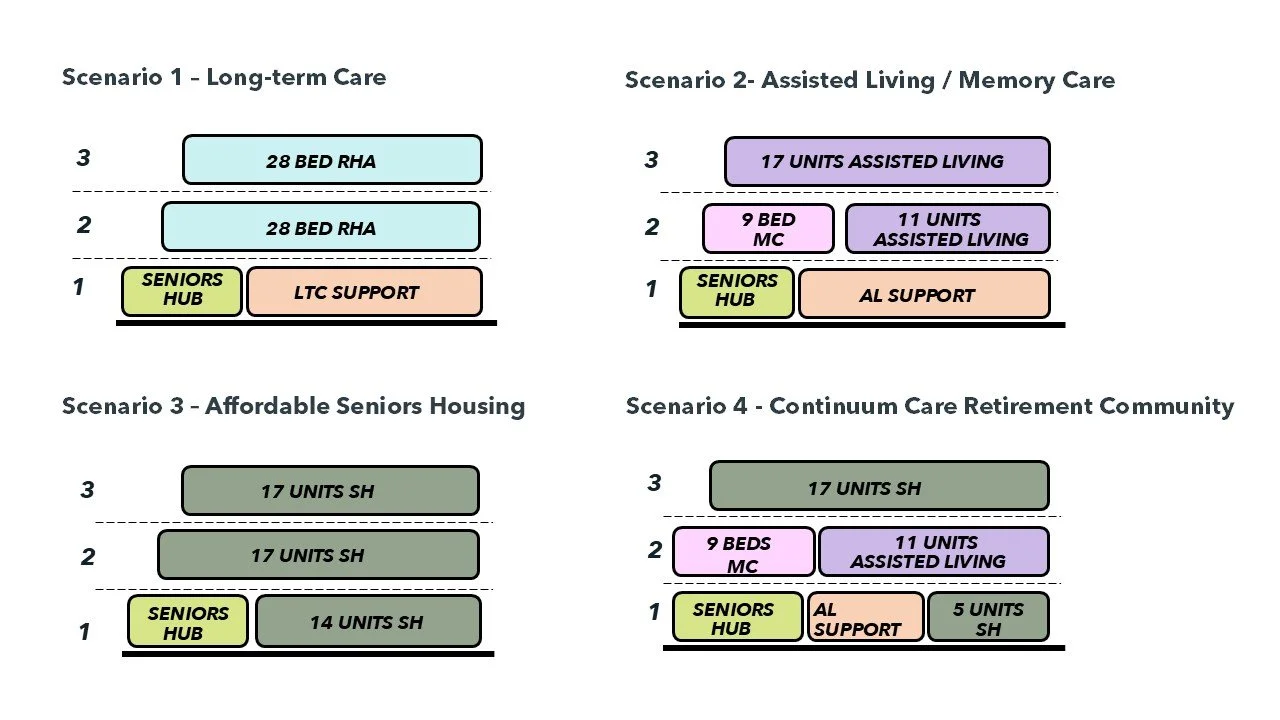
Example: Evaluating the Conversion Options for Grey County’s Rockwood Terrace LTC
Preserving Existing Assets
There is also a strong sustainability case for adaptive reuse.
Existing LTC homes contain significant embodied carbon within their structures and building materials. Demolishing these facilities and replacing them with new construction often results in substantial waste and the loss of invested resources. By reusing these buildings, owners can extend the life of existing assets and reduce environmental impact.
Managing the Risks of Conversion
Of course, renovating older buildings is rarely straightforward.
One of the biggest challenges is uncertainty. Older buildings often contain undocumented renovations, incomplete as-built drawings, aging infrastructure, and hidden conditions that are not apparent until construction begins. Buildings constructed under older codes may also require upgrades to meet current code requirements.
We recently encountered these challenges while converting a former long-term care home into a retirement residence. While the existing structure provided a strong foundation for redevelopment, significant discrepancies were found between the available documentation and actual site conditions. Existing fire separations required upgrades, and accessibility improvements were needed throughout the building.
Experiences like these reinforce the importance of investing in professional advice and investigations. Technologies such as 3D laser scanning allow us to create highly accurate digital models of existing facilities, providing a reliable foundation for planning and design. Moving from assumption-based planning to data-driven decision-making reduces uncertainty, improves coordination, and helps minimize costly surprises during construction.
Working With Existing Buildings, Not Against Them
Successful adaptive reuse projects also require a willingness to work with the existing building.
One of the key design challenges involved working within the constraints of the existing structure and avoiding unnecessary, costly changes to the structure. Suite layouts need to align with existing window locations to ensure every resident room receives direct daylight, while new washrooms and plumbing infrastructure must be carefully coordinated.
Rather than fighting the limitations of the building, a design team should embrace them. The result is a solution that maximizes the value of the existing asset while delivering a new model of care for the community.
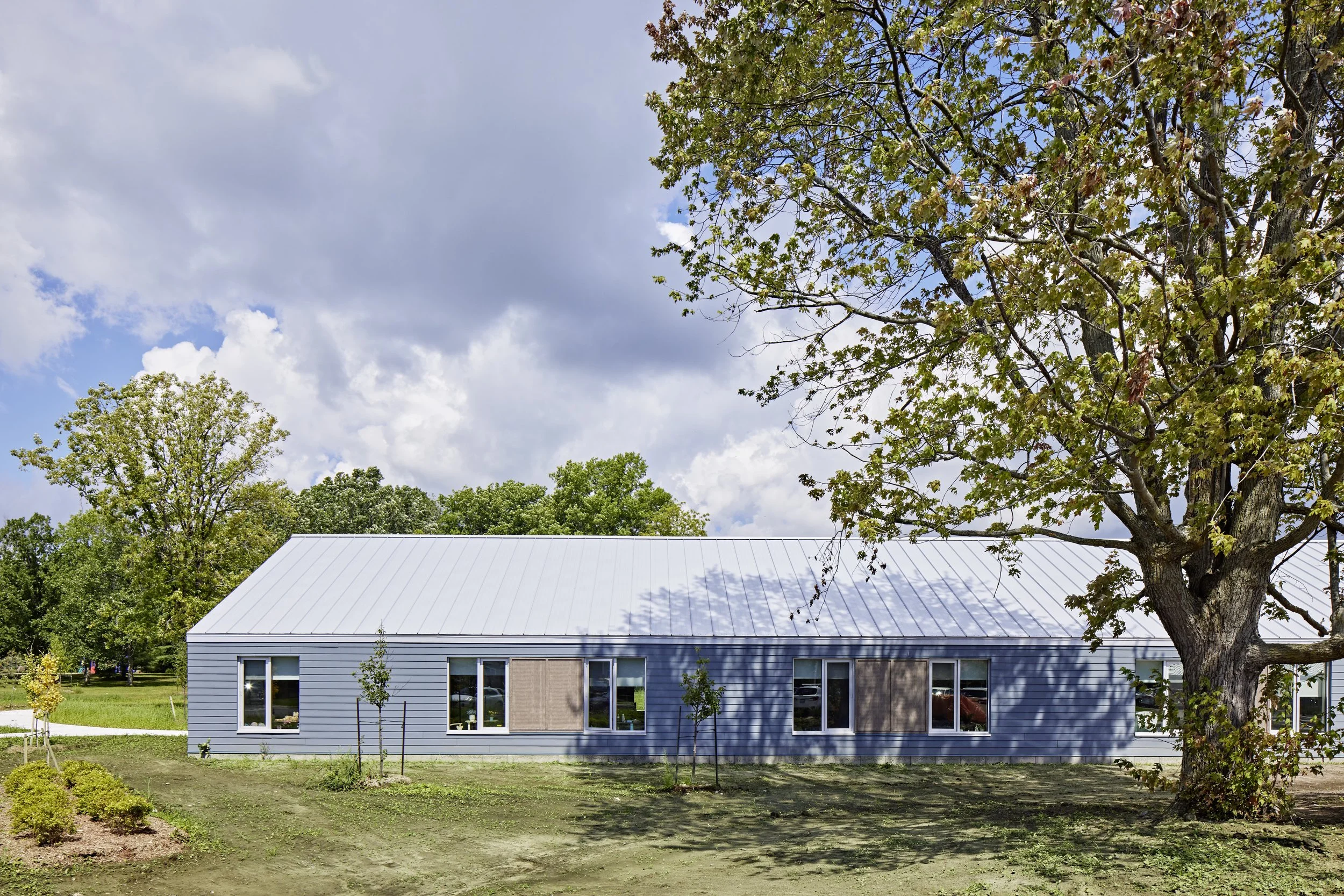
Woodland Villa, Omni Quality Living - Long Sault, ON
Looking Ahead
As governments, operators, and communities continue to search for solutions to Canada's housing and long-term care challenges, adaptive reuse should become a larger part of the conversation.
The next chapter in long-term care will not be defined solely by the new homes we build. It will also be defined by how effectively we repurpose the homes we already have.
With the right thinking, former LTC homes can become affordable retirement residences, supportive housing communities, or assisted living facilities that continue serving communities for decades to come. In doing so, they can help address housing shortages, reduce environmental impact, and create a stronger continuum of care for aging Canadians.
G architects has earned valuable experience and lessons learned on this topic through a variety of project experiences. We have recently explored renovations and adaptive reuse for a range of operators of aging long-term care homes, from municipalities (Grey County) to hospitals (Arnprior Regional Health) to private operators (Sandfield Place).